
network_intel_node
The Affinity Model
Affinity Model
- Availability
Instantly shows which carriers match the load using real-time network and 3-digit ZIP geocoding. - Compatibility
Scores every carrier based on historical performance, equipment, services, and your specific lane data. - Record results
Every acceptance, rejection, on-time performance, and cost outcome is automatically captured. - Feedback loop
The model continuously improves — the more loads you move, the smarter it gets.
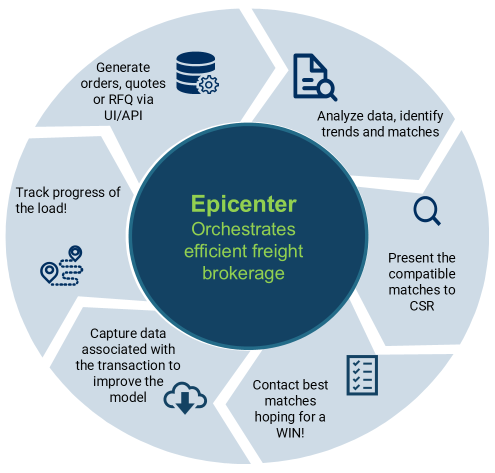
The Epicenter is the Center of All the Work
Every single module in Epicenter automatically captures real transaction data at the county-to-county level. This data continuously trains and improves the Affinity Model — creating a self-learning system that gets smarter with every load.
CRM
RFQ wins, bid vs actual performance, customer metadata
Quote & Order
Order creation, route data, delivery times, DAT/Greenscreens rates
Planned Orders
Load status, equipment type, priority, tags, in-transit visibility
Carrier Procurement
Carrier matches, RMIS certification, Macropoint updates, acceptance/rejection data
Tracking
Arrival / departure events, exceptions, cross-border updates, stakeholder feedback
All 5 modules → One Unified Epicenter → Smarter Affinity Model every day
group
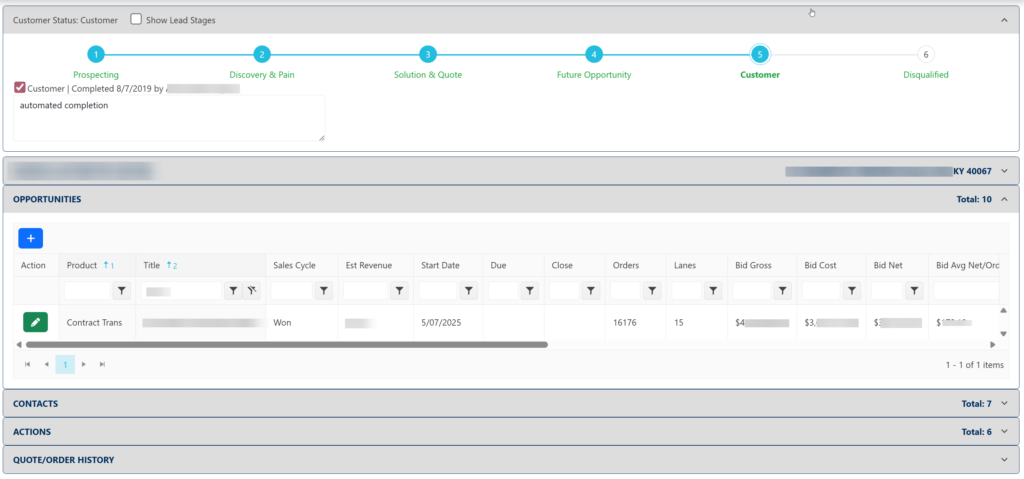
CRM Epicenter
- Manage yearly RFQ’s at a Lane level
- Manages RFQ wins by connecting every completed load to original won lane
- Auto tender RFQ wins based on carrier contracts
- Includes a customer portal that can be managed via the customer contacts
- Connects to the affinity model by quickly showing up in the Carrier Sales Epicenter to get final cost
- Real-time view of Bid vs Expected Vs Actual RFQ attributes: Load count, gross, cost, net, Avg Net/Order
- Tag customers with key organizational level metadata labels
request_quote
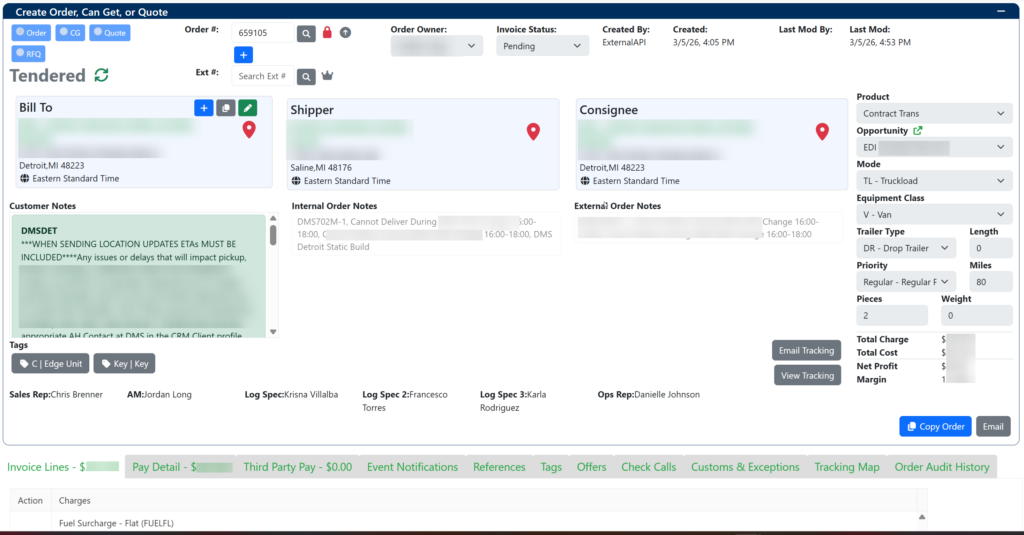
Order & Quote Management Epicenter
- Advanced modern order and quote management using a powerful enterprise-level web and mobile stack of Angular and Azure.
- Build orders and quotes in seconds, automatically suggest the delivery time based on miles and DOT breaks
- Instant route map with full tracking visibility and notification plots
- Create and copy master order templates • Quickly copy one-off orders
- Tag orders with organizational metadata labels that flow through the entire life cycle
- Create a round-trip load with one click • Quickly split a load or add stops
- API integration to DAT rates and Greenscreens.ai
- Easily setup load notification schedule with internal and external email communication
- Easily set up internal or external event notification for arrivals, departures or all events
- Quickly email teammates with structured order/load details • Share external tracking links
- Skip the UI and use our Full API integration
distance
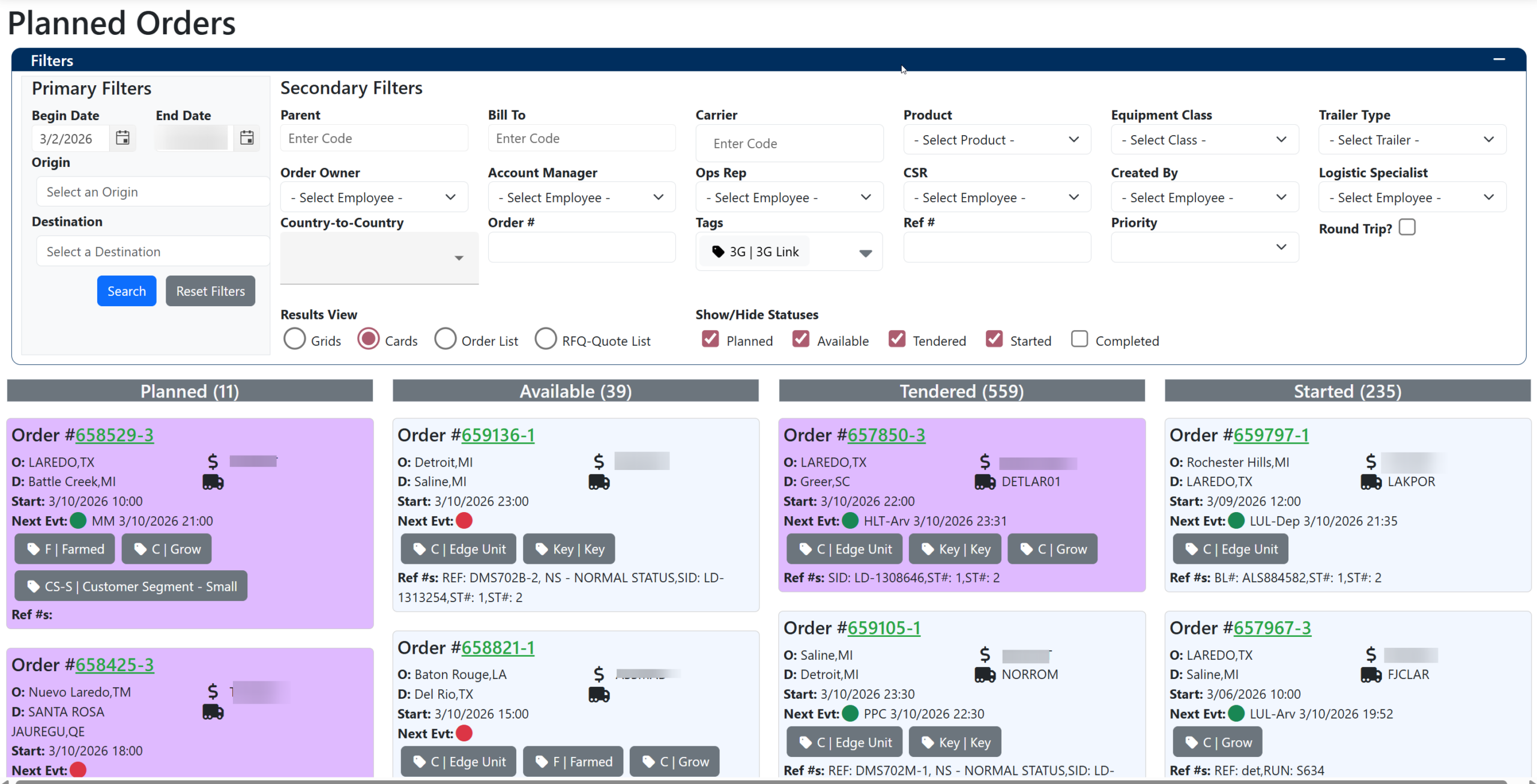
Planned Orders Epicenter
- Quickly view all organizational loads in transit by key attributes: Bill To, Carrier, product, equipment class, trailer type, tags, priority, order references, customer team members
- Presents the data in siloed grids or cards for load status (planned, available, tendered, started and completed)
- Browser or mobile friendly
delivery_truck_speed
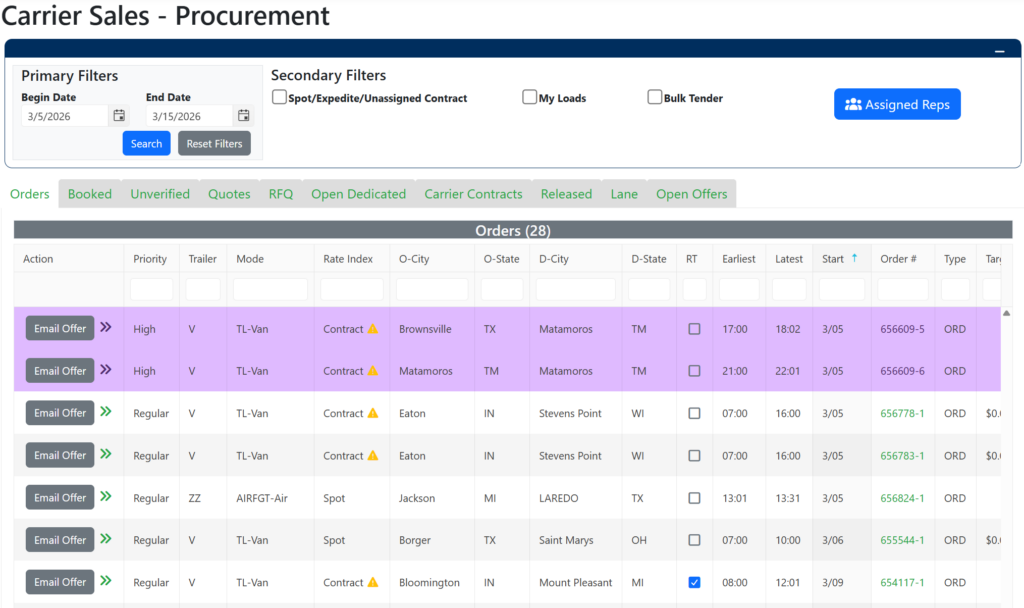
Carrier Procurement Epicenter
- Instantly view all available opportunities that haven’t been procured
- Quickly presents compatible carrier matches based on your carrier network procurements and the affinity model
- Efficiently presents load details required for procuring the carrier and negotiating the best rate (DAT Rate, Greenscreen Rate, Carrier Required Services)
- Manager Dashboard gives a quick view of key details per carrier sales representative
- Integrated with RMIS for Carrier Certification (green/red light + P indicator)
- Upon awarding a carrier, get full Macropoint integration with one-click
- Instantly emails the carrier with a PDF rate confirmation and acceptance link
- Includes a carrier portal for document upload and load updates
calendar_clock
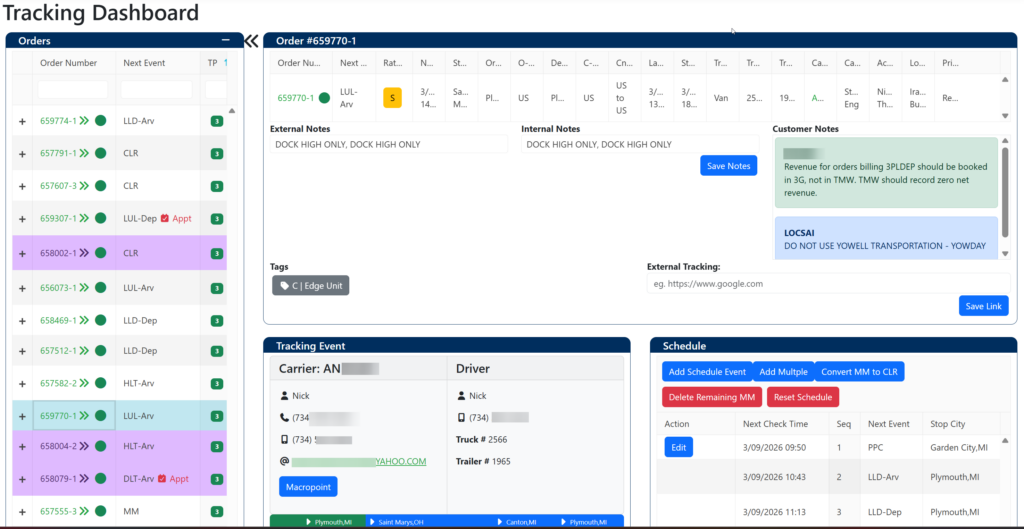
Tracking Epicenter
- Industry leading tracking system that efficiently prioritizes all load events
- Manage exceptions and Escalations
- Incorporates cross border requirements
- Effectively presents current statuses to inside and outside stakeholders
- Automates arrivals, departures, and location updates through webhooks or API call
- Manages load notifications to internal and external stakeholders